Your Study on reactive dye with cotton fabric images are ready. Study on reactive dye with cotton fabric are a topic that is being searched for and liked by netizens now. You can Download the Study on reactive dye with cotton fabric files here. Download all free images.
If you’re searching for study on reactive dye with cotton fabric images information related to the study on reactive dye with cotton fabric topic, you have come to the ideal site. Our website always gives you hints for viewing the maximum quality video and image content, please kindly hunt and find more enlightening video articles and graphics that match your interests.
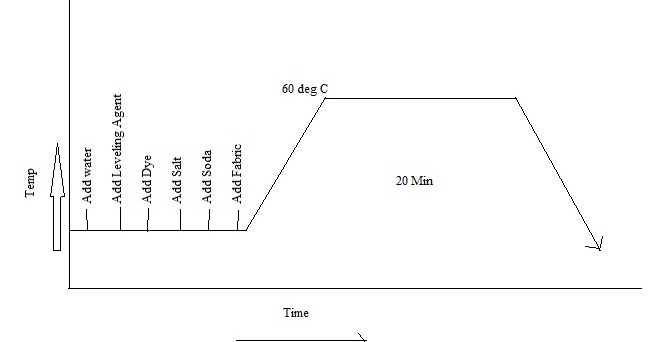
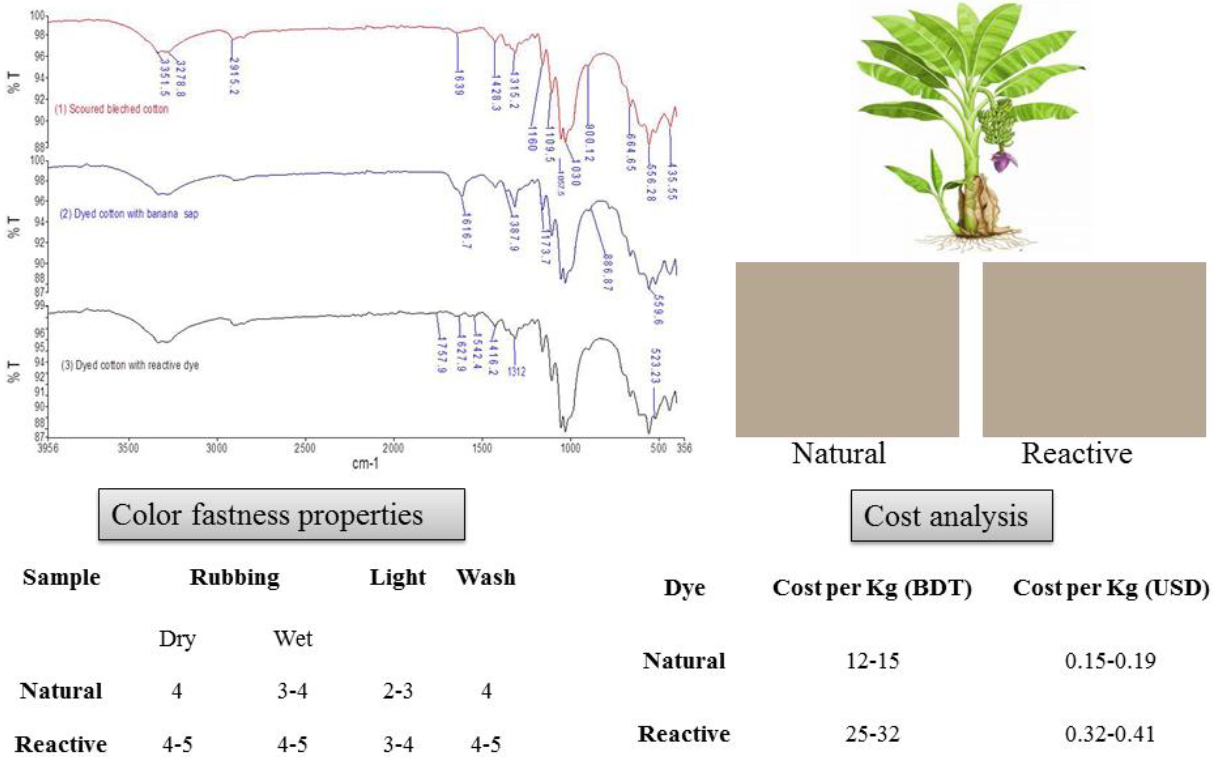
Study On Reactive Dye With Cotton Fabric. Dyeing of 100 cotton fabric with reactive dye to produce combined shade. Abstract - The present study utilizes salt free dyeing on cotton which would not contribute to environmental pollution an undertaken to explore promising approach to reduce cost of dye process. To observe the practical advantages and disadvantages of this dye. After dyeing pH of the wash liquor was compared in both cases.
 Process Curve For Dyeing Of Cotton Fabric With Reactive Dye Download Scientific Diagram From researchgate.net
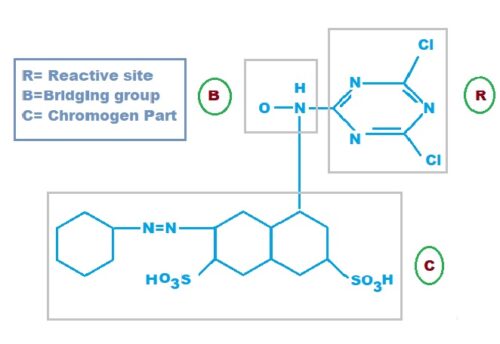
Nowadays reactive dyes are widely used in dyeing cotton materials. Tanvir Ahammed Rana Id. Reactive dyes forms covalent bond with fibre polymer and thus attach itself with fibre. Reactive dyes forms covalent bond with fibre polymer and thus attach itself with fibre. This novel study emphasizes to compare the properties of 100 cotton fabric printed with pigments and reactive dyes. By this experiment we have acquire knowledge about process of printing cotton materials with cold brand reactive dyes in combination shade.
Color uniformity and washing fastness test of the dyed fabric were also compared in both cases.
Dyeing of Cotton with Reactive Dye Prepared By. Reactive dyes are a class of highly colored organic substances primarily used for tinting textiles that attach themselves to their substrates by a chemical reaction that forms a covalent bond between the molecule of dye and that of the fibre. Their dyeing and fastness properties were compared. The spectra were recorded in the UV-Vis range between 200 and 800nm in transmission mode. ELSEVIER Vibrational Spectroscopy 15 1997 103 - 111 VIBit ll IM SPE JSC Y A DRIFTS study of reactive dye states on cotton fabric S. Rovisco Pais 1049-001 Lisboa Portugal Email.
 Source: researchgate.net
A dye which is capable of reacting chemically with a substrate to form a covalent dye substrate linkage is known as reactive dye. Aim-Study to dye cotton fabric with Cold brand reactive dyesWhat are Reactive dyes. To dye a material practically. Dyeing of Cotton with Reactive Dye Prepared By. The combination of brightness fastness and its application unable this dyes to be use to color the cellulosic fiber.
 Source: researchgate.net
Meyer b a Centre for Instrumental and Developmental Chemistry School of Chemistry Queensland University of Technology Brisbane Australia b Department of Industrial and. Hot brand reactive dyes can be exhausted almost entirely on to the cellulose fibres. Reactive dyes forms covalent bond with fibre polymer and thus attach itself with fibre. This novel study emphasizes to compare the properties of 100 cotton fabric printed with pigments and reactive dyes. 2012000400038 19th Batch Textile Department.
 Source: practicaltextile.com
The result obtain from dyed samples the combine pre-treatment by. Aim-Study to dye cotton fabric with Cold brand reactive dyesWhat are Reactive dyes. The effect of cellulose coating on the dyeing properties of cotton fabric was studied by determining the KS values of coated substrate at different. Dyeing of cotton fabric with azoic dye. The insoluble azoic colors are synthesized inside the fiber by coupling of two individual components neither of which is a dye itself.
 Source: researchgate.net
It forms a covalent bond with cotton fiber cellulosic fiber. Name of the Experiment. Printing of cotton fabric with reactive dyes Screen printing method Objectives. Three different reactive dyes were used for dyeing coated cotton fabric. Tie-Dyeing of 100 cotton fabric with reactive dye to produce combined shade.
 Source: researchgate.net
It is now a days mostly used for dyeing cotton yarn and fabric. Whiteness of fabric dyeing also impact on environment. To dye a material practically. The effect of cellulose coating on the dyeing properties of cotton fabric was studied by determining the KS values of coated substrate at different. Name of the Experiment.
 Source: practicaltextile.com
The cotton fabric dyed with hot brand reactive dye in exhaust dyeing process to give a excellent results. Tie-Dyeing of 100 cotton fabric with reactive dye to produce combined shade. Reactive dyes forms covalent bond with fibre polymer and thus attach itself with fibre. This study utilised woven cotton fabrics dyed with different concentrations of one-compound reactive dyes with the commercial name Cibacron at present Novacron as the focus of the MSP analysis. Dyeing of cotton fabric with reactive dye hot brand Theory.
 Source: diutestudents.blogspot.com
In this study a mixed bi-functional reactive dye was applied to the cotton and hemp woven fabrics. Reactive Red 120 was kindly supplied by Everlight Chemical Industrial Co Taiwan China and used after desalting purification The dye exhaustion of 23 kinds of commercial reactive dyes were. Dyeing of cotton fabric with reactive dye hot brand Theory. Dyeing on the cotton gave better color strength at 80 0 c temperature than 94 0 c temperature. In conventional Method of dyeing of cotton with reactive dyes alkali PH is should maintain in the dye bath.
 Source: researchgate.net
By this experiment we have acquire knowledge about process of printing cotton materials with cold brand reactive dyes in combination shade. Three principle steps are happened during reaction dyeing. Cold brand reactive brands. To dye a material practically. Color uniformity and washing fastness test of the dyed fabric were also compared in both cases.
 Source: textileanalysis.blogspot.com
Cold brand reactive brands. Then color yield and fixation efficiency were compared. Name of the Experiment. For this purpose a bleached cotton fabric was. Dyeing off 100 cotton knit fabric with reactive dye.
 Source: researchgate.net
To observe the practical advantages and disadvantages of this dye. A factorially-designed study of physico- Coloration chemical reactive dye colour removal Technology from simulated cotton textile processing wastewaters G Carvalho W Delée J M Novais and H M Pinheiro Centro de Engenharia Biológica e Química Instituto Superior Técnico Av. The combination of brightness fastness and its application unable this dyes to be use to color the cellulosic fiber. Dyeing of cotton fabric with reactive dye hot brand Theory. From the results it was observed that the cotton fabric exhibits better exhaustion and.
 Source: diutestudents.blogspot.com
Reactive dyes are a class of highly colored organic substances primarily used for tinting textiles that attach themselves to their substrates by a chemical reaction that forms a covalent bond between the molecule of dye and that of the fibre. To compare the theoretical idea with practical experiment. It reacts with fiber in presence of alkali and adheres as a part of fiber. Three principle steps are happened during reaction dyeing. To observe the practical advantages and disadvantages of this dye.
 Source: researchgate.net
The combination of brightness fastness and its application unable this dyes to be use to color the cellulosic fiber. This study utilised woven cotton fabrics dyed with different concentrations of one-compound reactive dyes with the commercial name Cibacron at present Novacron as the focus of the MSP analysis. From the results it was observed that the cotton fabric exhibits better exhaustion and. To dye a material practically. Dyeing of 100 cotton fabric with reactive dye to produce combined shade.
 Source: scielo.org.mx
Nowadays reactive dyes are widely used in dyeing cotton materials. In this study a mixed bi-functional reactive dye was applied to the cotton and hemp woven fabrics. To compare the theoretical idea with practical experiment. Dyeing off 100 cotton knit fabric with reactive dye. By this experiment we have acquire knowledge about process of printing cotton materials with cold brand reactive dyes in combination shade.
 Source: practicaltextile.com
The spectra were recorded in the UV-Vis range between 200 and 800nm in transmission mode. The effect of cellulose coating on the dyeing properties of cotton fabric was studied by determining the KS values of coated substrate at different. The cotton fabric dyed with hot brand reactive dye in exhaust dyeing process to give a excellent results. Nowadays reactive dyes are widely used in dyeing cotton materials. Dyeing of 100 cotton fabric with reactive dye to produce combined shade.
Source: researchgate.net
From the results it was observed that the cotton fabric exhibits better exhaustion and. The result obtain from dyed samples the combine pre-treatment by. It is now a days mostly used for dyeing cotton yarn and fabric. Reactive dyes forms covalent bond with fibre polymer and thus attach itself with fibre. Tie-Dyeing of 100 cotton fabric with reactive dye to produce combined shade.
 Source: semanticscholar.org
Reactive Red 120 was kindly supplied by Everlight Chemical Industrial Co Taiwan China and used after desalting purification The dye exhaustion of 23 kinds of commercial reactive dyes were. In this study cotton fabric was dyed with reactive dyes using soda ash and its lower amount of eco-alkali. A dye which is capable of reacting chemically with a substrate to form a covalent dye substrate linkage is known as reactive dye. To observe the practical advantages and disadvantages of this dye. Exhaustion or reaction and after treatment as washing when a cellulosic fibre is immersed into dye solution.
 Source: researchgate.net
Aim-Study to dye cotton fabric with Cold brand reactive dyesWhat are Reactive dyes. The insoluble azoic colors are synthesized inside the fiber by coupling of two individual components neither of which is a dye itself. Hot brand reactive dyes can be exhausted almost entirely on to the cellulose fibres. It is now a days mostly used for dyeing cotton yarn and fabric. Whiteness of fabric dyeing also impact on environment.
 Source: semanticscholar.org
The effect of cellulose coating on the dyeing properties of cotton fabric was studied by determining the KS values of coated substrate at different. Negative charge produce and. In this study cotton fabric was dyed with reactive dyes using soda ash and its lower amount of eco-alkali. Dyeing process of cotton fabric with reactive dyes. It forms a covalent bond with cotton fiber cellulosic fiber.
This site is an open community for users to do submittion their favorite wallpapers on the internet, all images or pictures in this website are for personal wallpaper use only, it is stricly prohibited to use this wallpaper for commercial purposes, if you are the author and find this image is shared without your permission, please kindly raise a DMCA report to Us.
If you find this site serviceableness, please support us by sharing this posts to your favorite social media accounts like Facebook, Instagram and so on or you can also save this blog page with the title study on reactive dye with cotton fabric by using Ctrl + D for devices a laptop with a Windows operating system or Command + D for laptops with an Apple operating system. If you use a smartphone, you can also use the drawer menu of the browser you are using. Whether it’s a Windows, Mac, iOS or Android operating system, you will still be able to bookmark this website.


